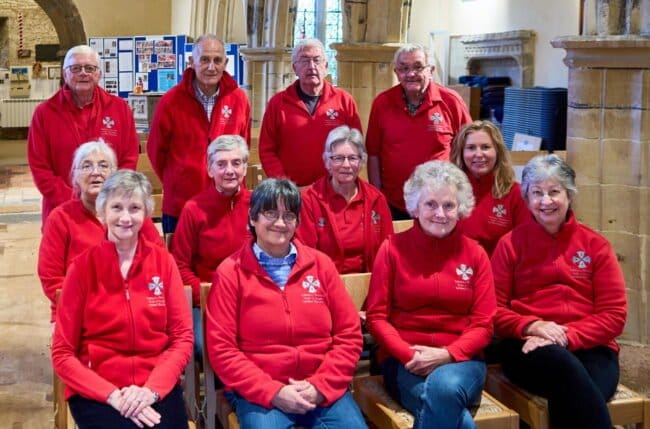
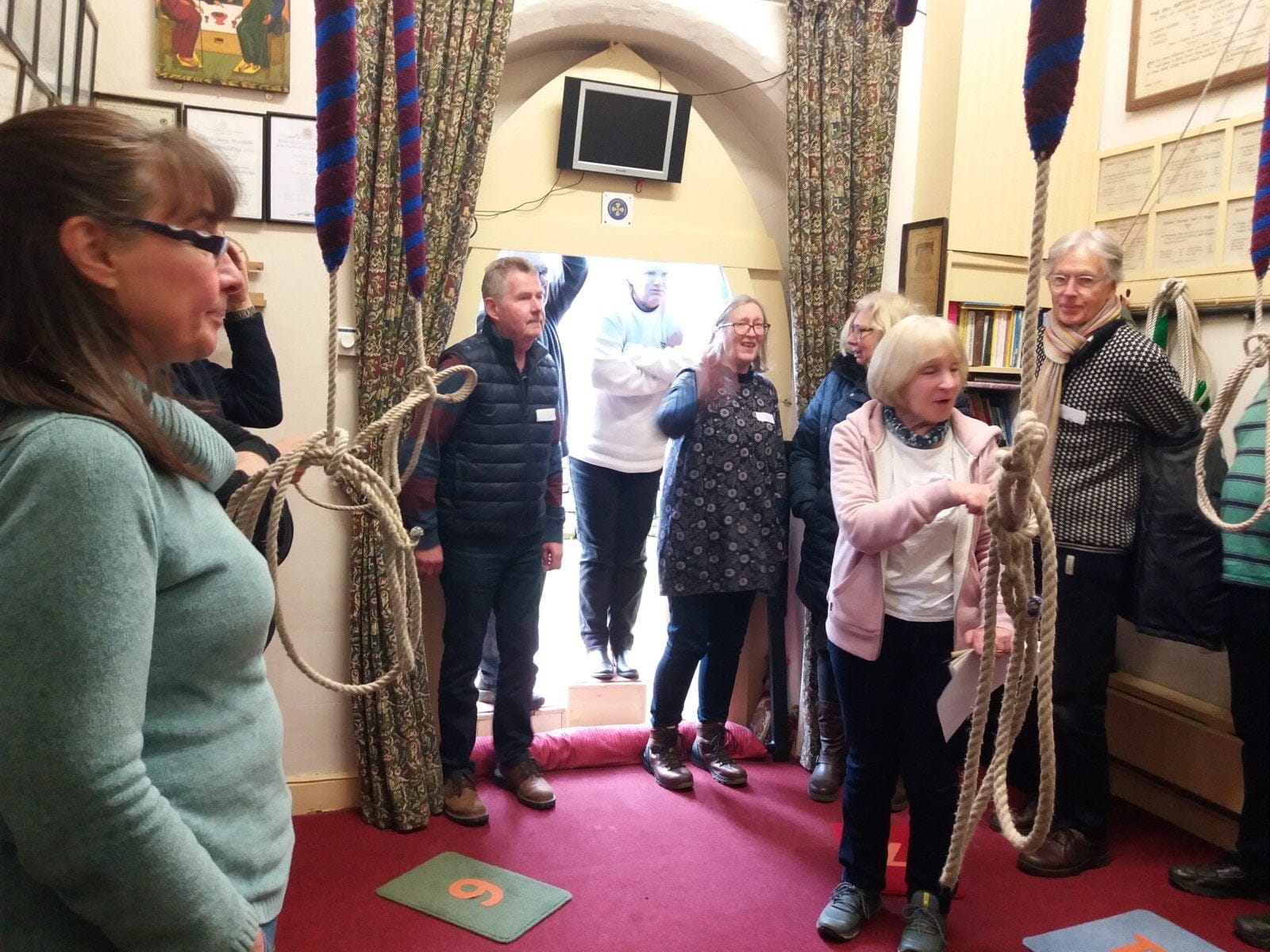
Nineteen bell ringers representing twelve towers descended on Holy Trinity Church in Bradpole on Saturday 9th February 2024 for a full day to focus on enhancing performance through improving listening skills. The participants were across the full spectrum of abilities from ARTS teachersand tower captains to those just having become competent in bell handling and ringing rounds.
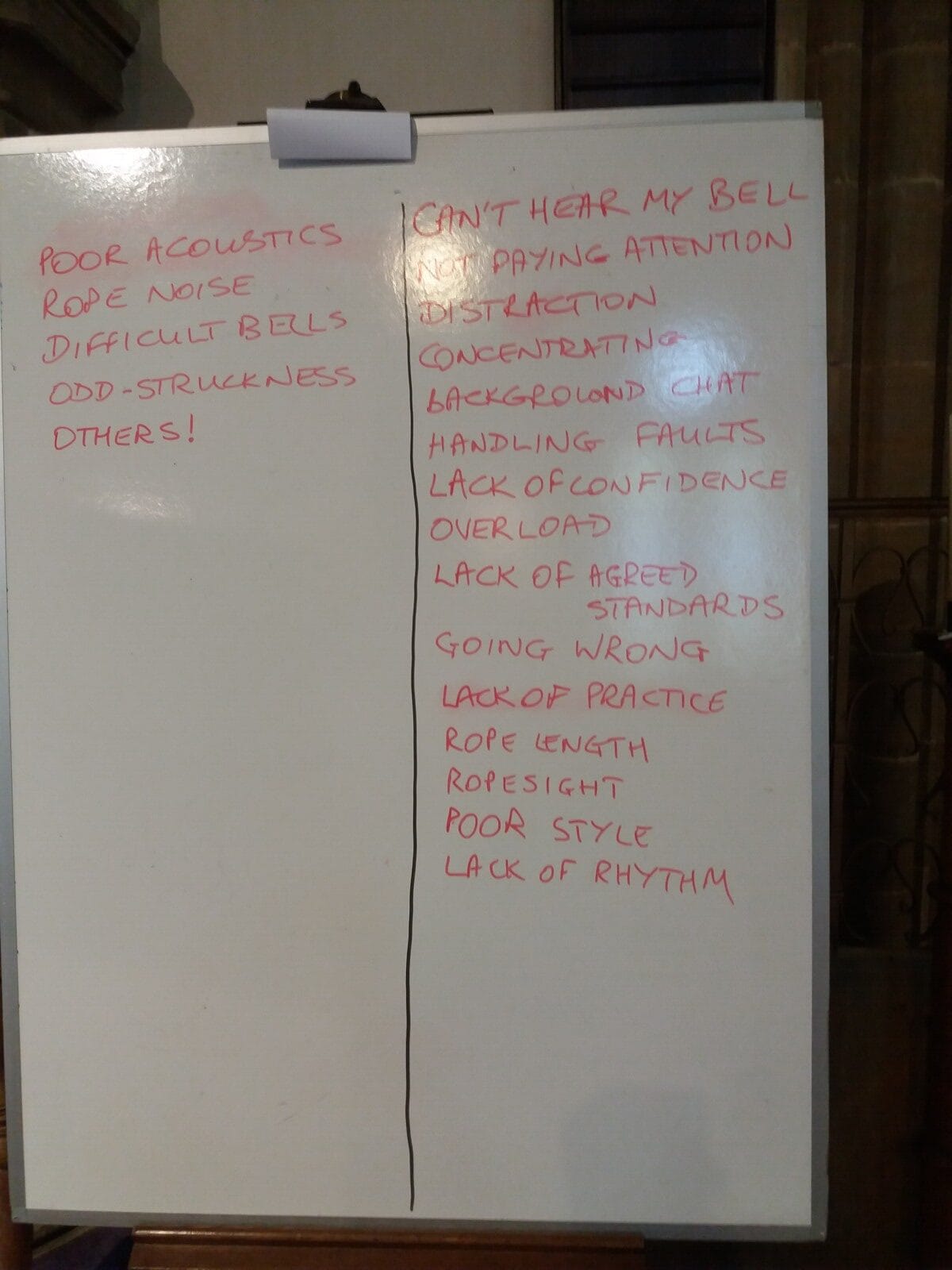
The session began with the teaching panel: Sue Carter, Andy Waring, Tim Phillips, and Simon Kewley expanding on how active listening will develop a keen sense of rhythm. This sense of rhythm and the recognition of how good ringing should sound will assist all ringers to improve their striking. Participants then identified issues which were under their control to assist with rectifying mistakes and improving their ringing. By the end of the day it was anticipated that we would be ringing using the sound of the bells and our own sense of rhythm rather than rope sight. We were rather relieved to find that we would not be blindfolded as in the video we’d been asked to preview before the course.
We were then split into three teams; Kings, Queens, and Tittums, mixing ability and towers.
1: The Bong Test: Simon Kewley
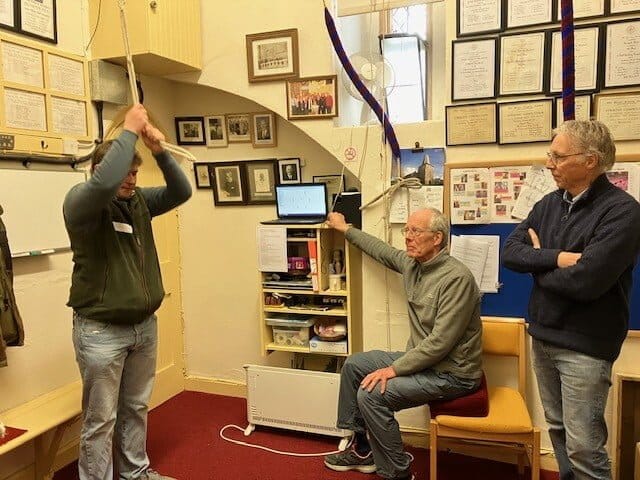
Using the tower simulator each participant rang a bell in turn and sounded out a ‘bong’ when they believed the bell would strike. The simulator was then turned to silent and the ringer kept going until the simulator was turned back on to see if they were still striking in time. A bell ringers version of I am Sorry I Haven’t a Clue ‘s ‘Pick- up Song’. We were reminded that although by now bell handling has entered our muscle memory to still watch out for sloppy technique which will get in the way of accurate striking and may well result in compounding errors . We were given additional useful material to reinforce what we were being told. For those who are interested, it was produced by the Central Council and you can read it here here.
2: Spot the Mistakes: Andy Waring

Using computer generated ringing sequences the groups were asked to spot deviations from completely evenly rung rounds. The group quickly began to be able to identify which was the ‘guilty’ bell where the deviations from the perfect interval were between 20-30%. Some members of the group identified more easily than others if the deviation was on the hand or back stroke. The faulty intervals became harder to hear as the deviations became smaller. We were given handy hints for more focused listening, for example looking for the open hand stroke gap to place where you are in the row. For my limited expertise, closing my eyes and counting made the deviation easier to spot. By the end of the session I, certainly, was palpably listening in a different way. Evidently perfect ringing is not achievable but recognising an error and compensating for it swiftly may mean others particularly non- bell ringers do not notice.
3: Name that Method: Tim Phillips

At first this exercise for the less experienced ringers was tough. As with all ARTS teaching, progression in identifying what was being rung was incremental; building skill and confidence but again forcing focused listening. The session started with simply identifying how many bells in the round. This also required some practice in accurate use of terminology. We then moved on to identifying increasingly complex changes and methods. The more experienced amongst us could with startling alacrity write out the order of the bells being heard. This I would like to try again. We were encouraged beyond the training to listen to other bands ringing as well as recordings that are available.
4: The Tower: Sue Carter
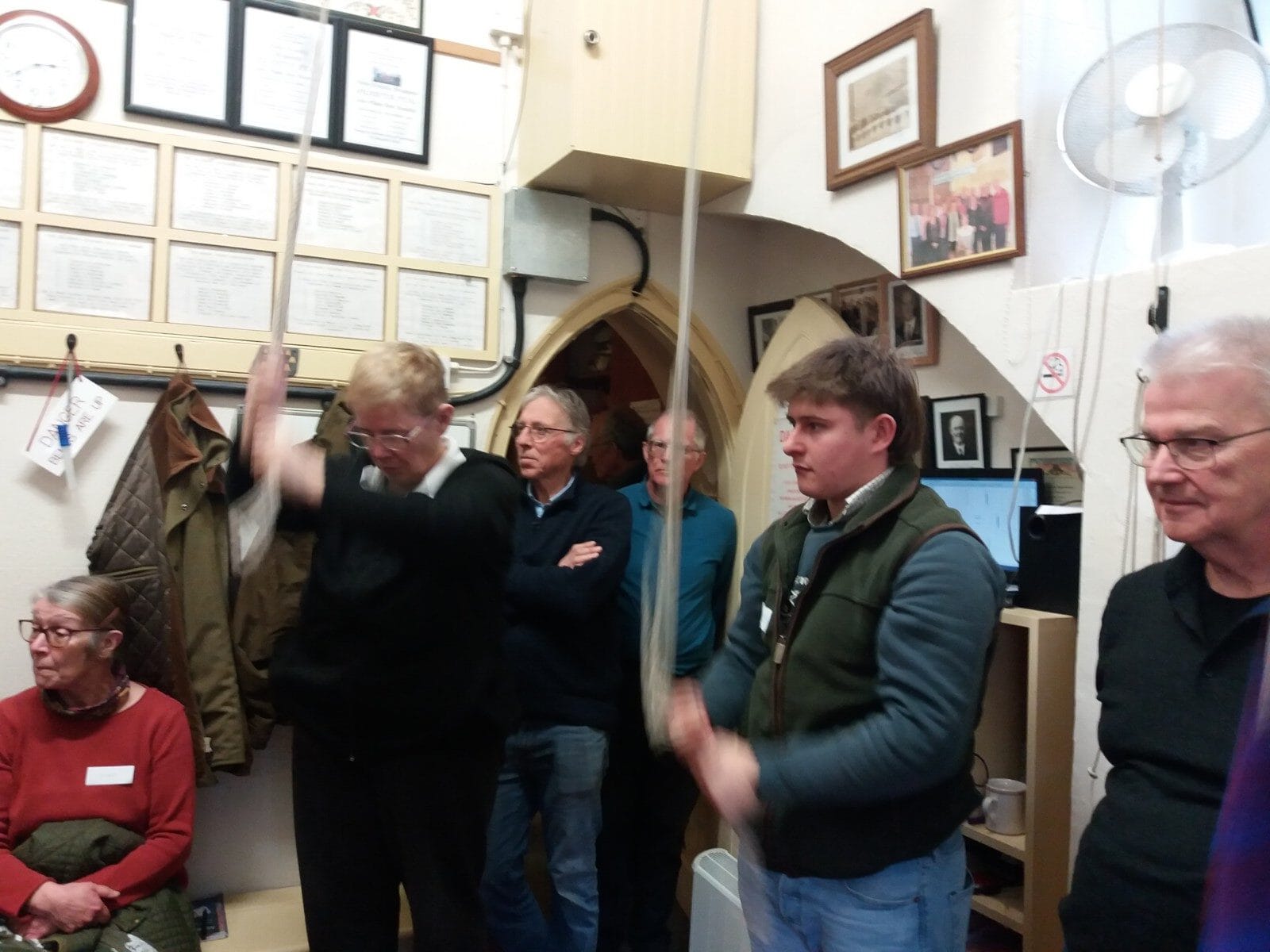
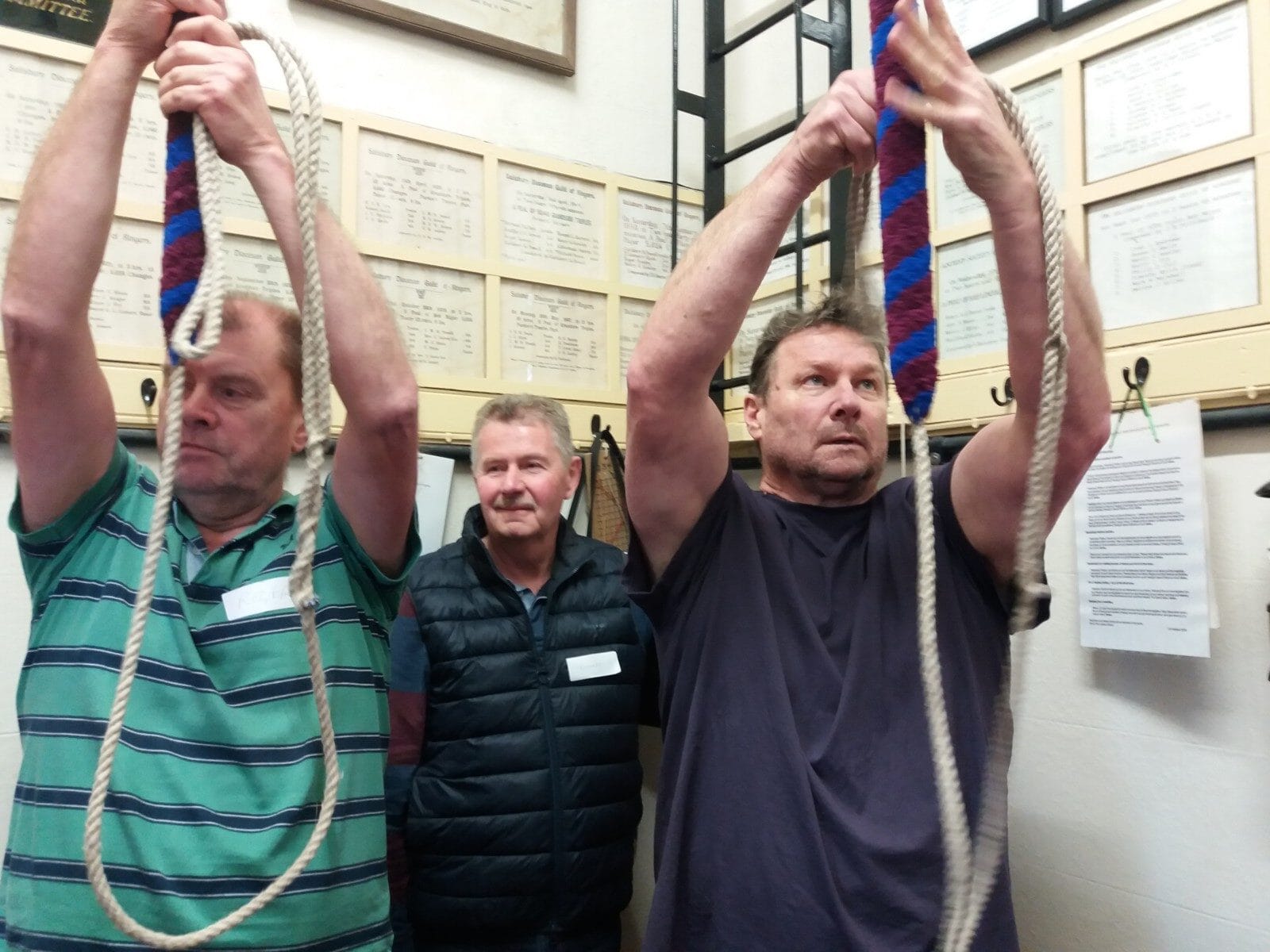
Finally we all came into the tower together. In our allocated groups we rang rounds. Once the rounds settled we rang without using ropesight, relying solely on rhythm and sound. This skill was later further developed by adjacent bells being rung on alternate strokes. The atmosphere in the tower was energised. Every ringer was keen to rise to the new challenge of ‘blind’ ringing. An impromptu striking competition was then organised. Those ringing being listened to intently by the others seeking out deviations from what on the whole were well struck rounds. Finally the trainers and tower captains demonstrated doing plain hunt whilst facing the wall. It was seriously impressive and a great conclusion to the listening exercises.
The day was a great success. A “heard” of listeners has been created. What has been heard cannot now be unheard. We are much more aware of even minor dissonance. We have been given techniques through our use of focussed listening to rectify and or improve our ringing. More importantly, as ever, we had fun.
Marina Hamilton