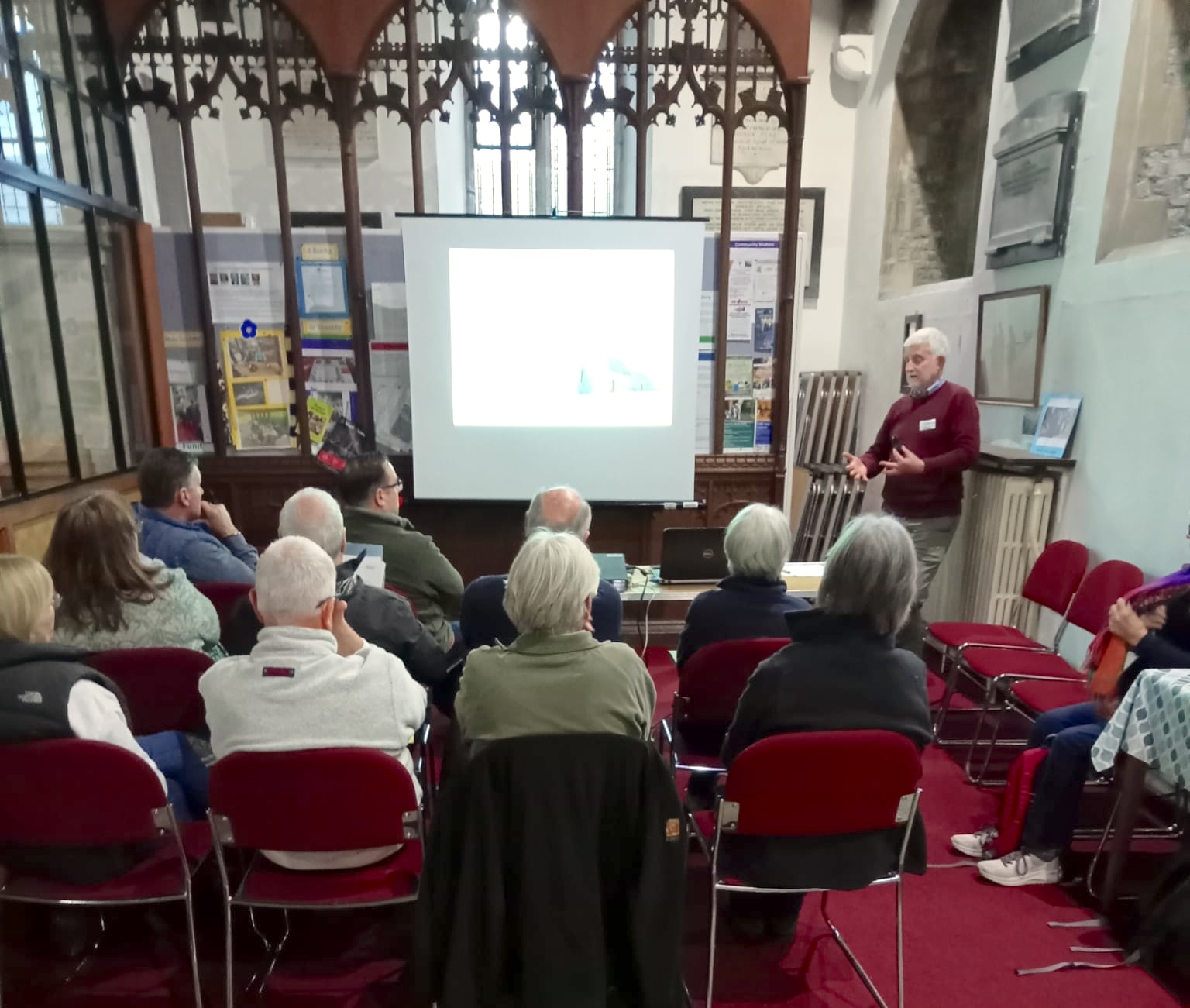
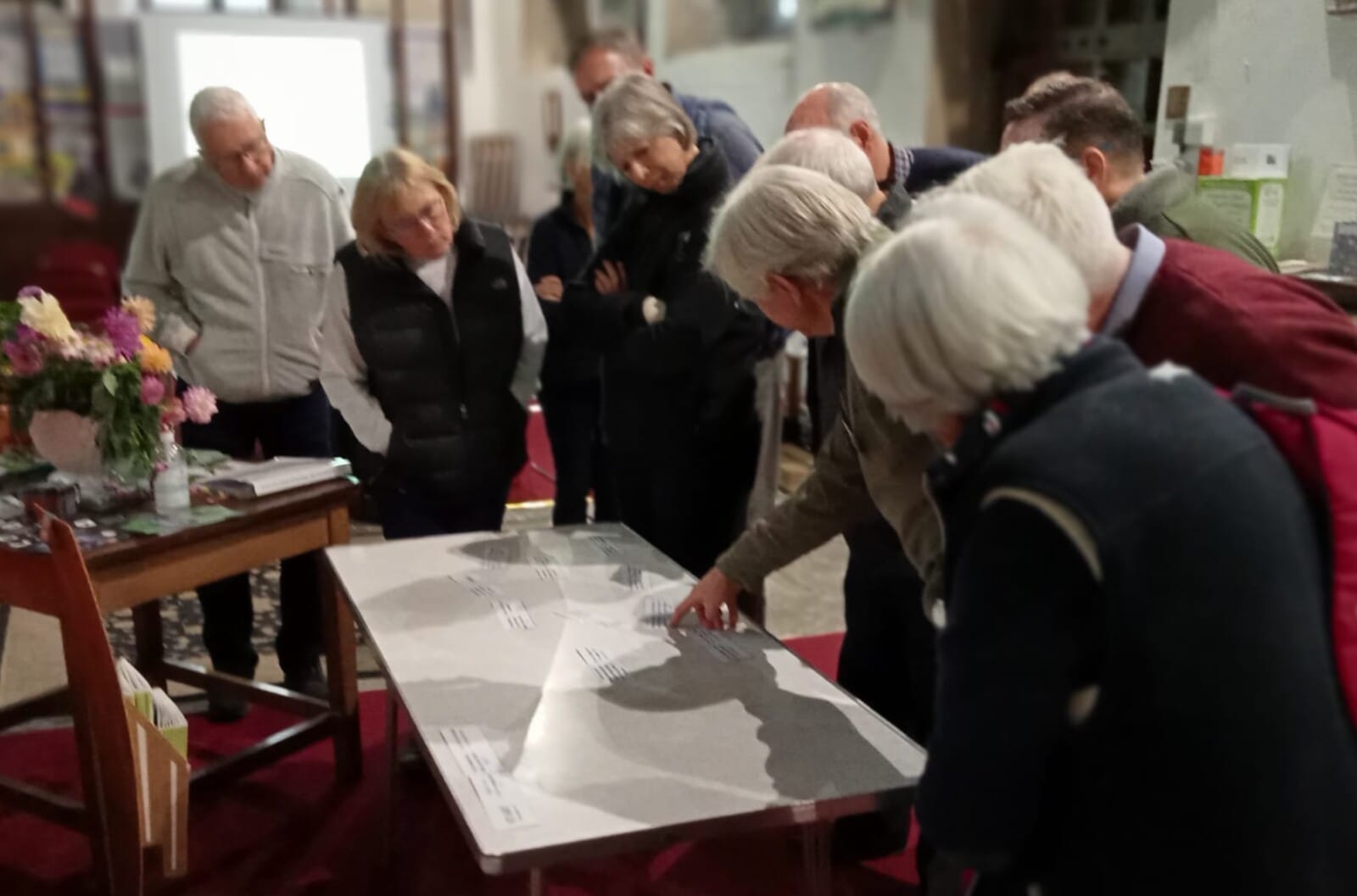
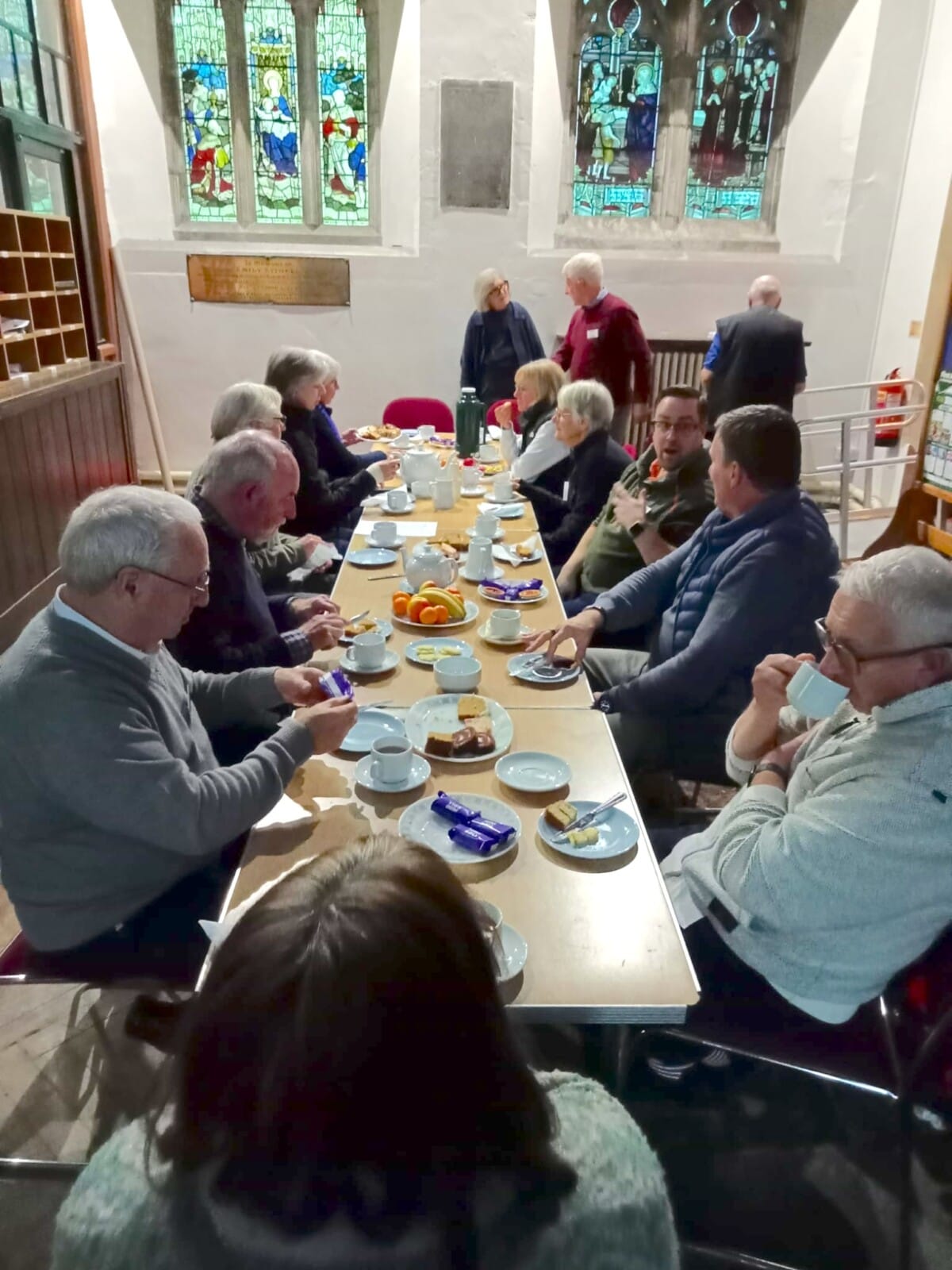
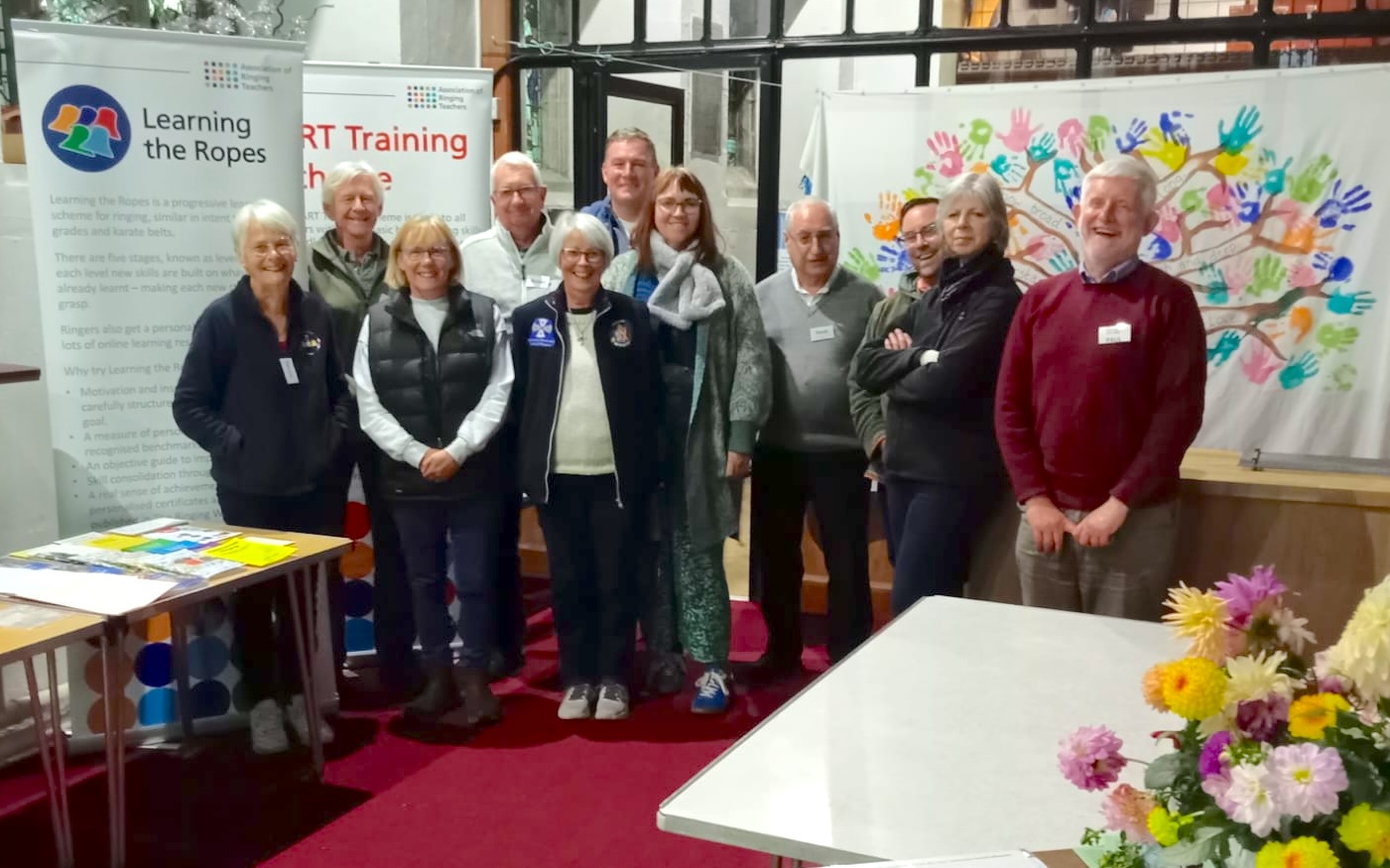
On Halloween, on a surprise cold day after the intense heat of the summer, we gathered in Pewsey parish church to learn to teach bellringing.
With half a brain still processing coffee, wishing I’d brought a blanket, and thinking about putting the finishing touches to my costume that evening (Tribbles, if you really want to know, Google it), I settled into the second course of the Association of Ringing Teachers (ART), aimed at ringers who’ve sussed their bell handling and developing their skill into call changes and the beginner’s ‘method’ of plain hunt.
Paul Lewis, from Hereford Guild, an experienced lecturer and teacher by workday, opts to teach this full day on his weekend because, he assures us, ‘I love it’.
The course is full with 11 participants and more on the waiting list. I suspect they aren’t just here to learn to teach. For bellringing junkies like me, a whole day of ringing has its own addiction fulfilment.
Developing a ringing skill can take months and years so how to handle a mixed ability band on practice night? How to keep skilled ringers challenged, learners on track, and involve ringers who’ve resolved they’ll never get beyond call changes? (no offence to the highly skilled call changers of Devon and Cornwall)
After Paul’s introduction, we headed up the tower. The simulator was calibrated for the muffled six bells so the local community don’t know we are ringing and, in the ringing chamber, the bell dings and dongs are played through a computer. To any ringer who hasn’t used a simulator, this is more realistic than you might expect and accurate to the bell’s usual ringing rhythm. It’s also easier to hear each individual bell and hone striking. Bells were rung up into a full circle ringing position and ringers took a few rounds to get used to the bells and whether the bell muffles were in the centre or left or right or whether that would affect bell handling. Most participants had learners or were, like Derek, involved with Devizes branch ringing centre in Edington or, like, Sarah, were part of a tower with ringers of all different standards.
The useful part of the day for me was bringing new ideas to call changes and bridging the gap between call changes and method ringing. The stages of learning consist of mastering the physical act of independently ringing a bell, then being able to control a bell enough to ring with others so it sounds good and become part of a bellringing band. Then being able to change the speed of a bell and understand how to shift your bell’s position in the sequence. Then how to make complicated changes in the sequence: it’s a combination of physical movement and sequencing which can fox even mathsy people. Then there’s the bellringing language. I remember trying to learn the method of Grandsire doubles and continually messing up in the same place, despite instruction and I thought I had it and they thought I had it. After the third or fourth time we realised it was because I had misunderstood a key bellringing term.
The ART course helps us understand these things. Len Roberts, one of ART’s stalwart supporters, shared at lunch that the best bellringing teachers have rung for around five years – long enough to be skilled but not so long that you forget how you ring – because it becomes seamless and unconscious muscle memory – and what you didn’t used to know. What is checking the bell? What does hold the rope ‘higher’ mean? If you’ve played video games and had friends who’ve had to reconfigure their console controller or computer mouse to ‘invert controller’, you will know that even seemingly simple language such as ‘shorten’ the rope can lead to the opposite happening. Is your learner an ‘invert’ instructions kind of person? Are you?
Paul showed us different ways of using call changes to develop our skills. Complicated method ringing requires a very competent level of bell handling. For instance, call changes are changes made on handstroke. Calling changes on the backstroke instead can practice backstroke skill. The schadenfreude of watching experienced ringers mess up can help learners with their confidence – it’s ok to make mistakes. We then practiced rounds without looking at the next bell and our ringing mentors duly messed up – but then got the hang of it.
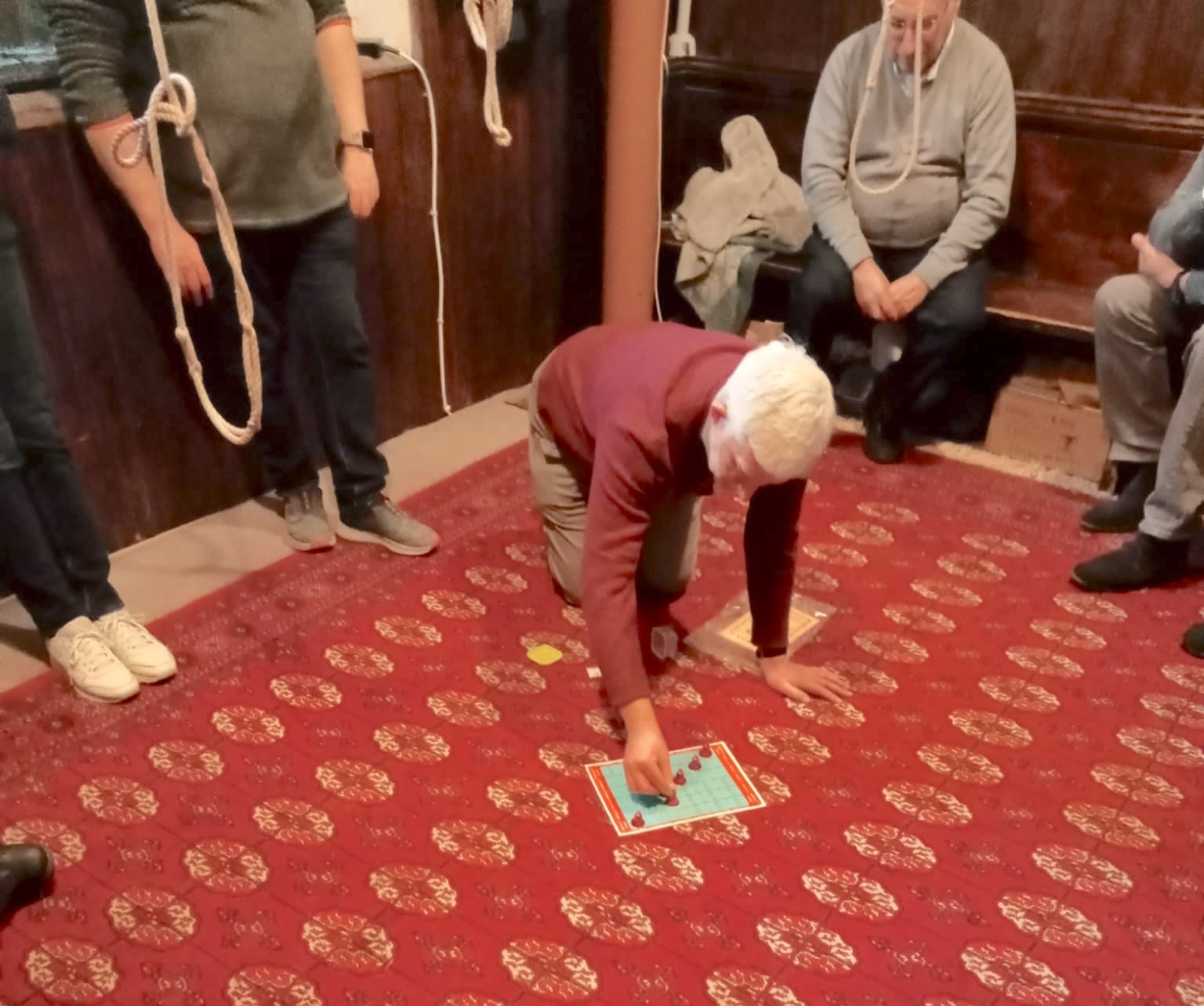
It’s also fun to gamify the learning. Paul handed out numbered cards to each ringer. The number was our position in the round. We had to pull off our bell accurately in position and those watching had to guess the order.
We practised firing, where all the bells strike at the same time, a ringing technique favoured at weddings. I was on tenor and the other bells had to ring with me. I thought I had the easy job, but actually I had to keep consistent time so the other bells could moderate their ringing to strike simultaneously.
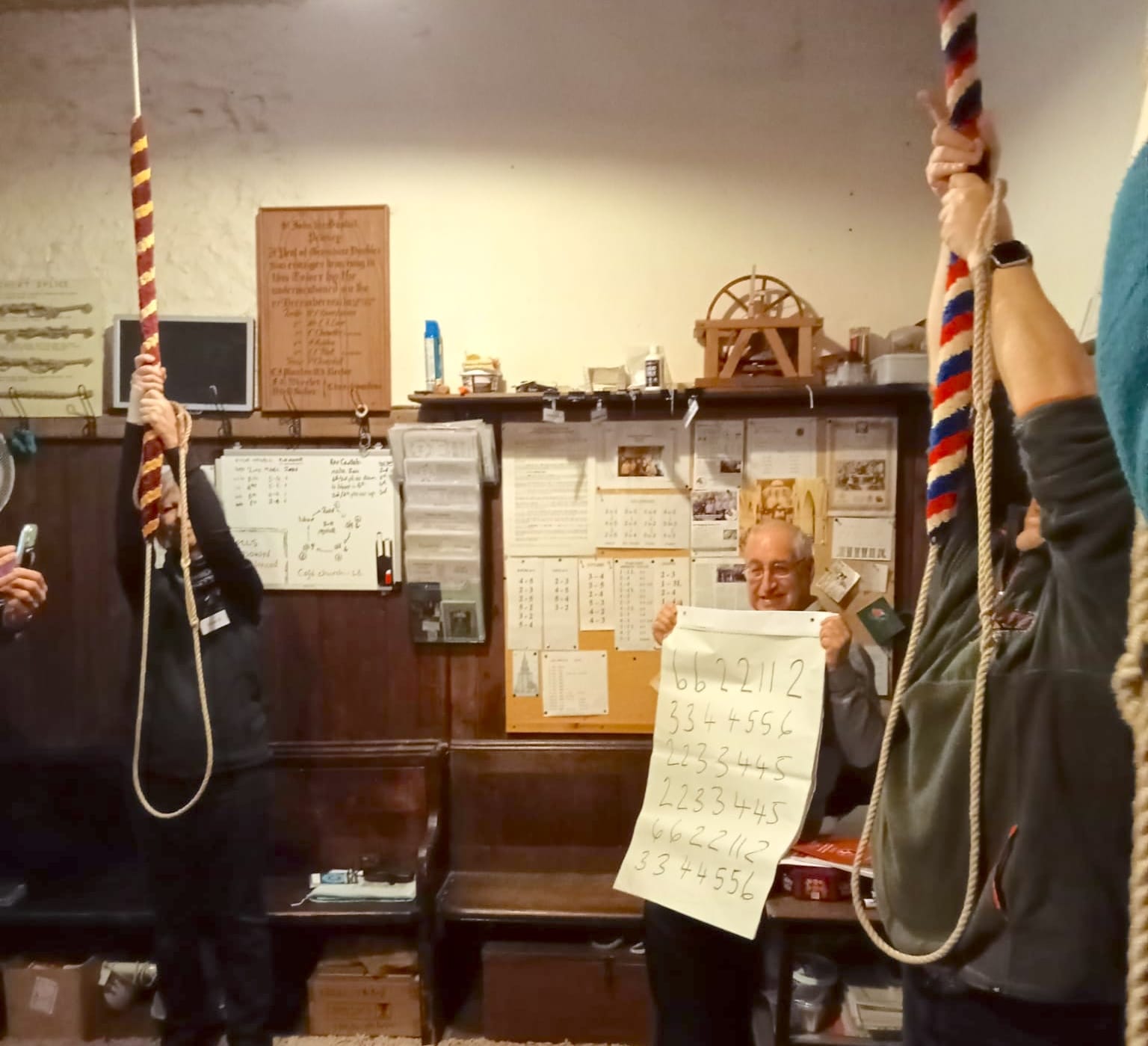
I rang a conventional tune for the first time. Or, more accurately, attempted to ring a tune. Twinkle twinkle little star involves often ringing one stroke only at a time, so I had to remember when it was my turn, ring so the tune sounded fluid and stand or hold the bell so only the one note was played. I reckon, a 50 percent success rate on bell handling and, like the day as a whole, a 100 percent success rate on fun.
Louisa Davison, All Cannings tower ringer, Devizes branch comms officer
Louisa attended the Association of Ringing Teachers’ Module 2F Foundation Skills (Teaching from Rounds to Plain Hunt) course with Paul Lewis, 31 October 2026, at St John the Baptist church, Pewsey, Wiltshire